

How We Attracted Investors for Restaurant Franchises With Tickets of 60–165 Million Rubles (≈$750K–$2.06M)
Investing in premium restaurants: how skimping on landing pages drove the cost of a qualified lead up to 56,000₽ (≈$703). Breaking down 3 franchises.
Read this article in Russian →
Today I'll share my experience promoting premium restaurant franchises with checks from 60 million to 165 million rubles (≈$750K–$2.06M). What makes this article juicy is that I worked with 3 franchises and got to use different approaches on each.
For confidentiality, the first client's franchise names have been changed to M1 and M2. The third project, from a different client, we'll call SH.
The first client flatly refused to allocate budget for new landing pages or video content, figuring that pressing the magic money button properly setting up Yandex Direct would be enough — while the second allocated resources for a full-fledged funnel. And these decisions led to critically different outcomes in the cost of a quality lead.
Product economics
Before we dive into the technical settings of Direct and campaign logic, let's look at the product itself. Investing in a premium-class restaurant business isn't like buying a neighborhood coffee shop franchise for a couple million rubles. This is a completely different scale, a different decision-making cycle, and, most importantly, completely different requirements for brand packaging.
To give you a sense of the financial entry threshold for a potential investor, here is the official economics data for all three franchises I worked with:
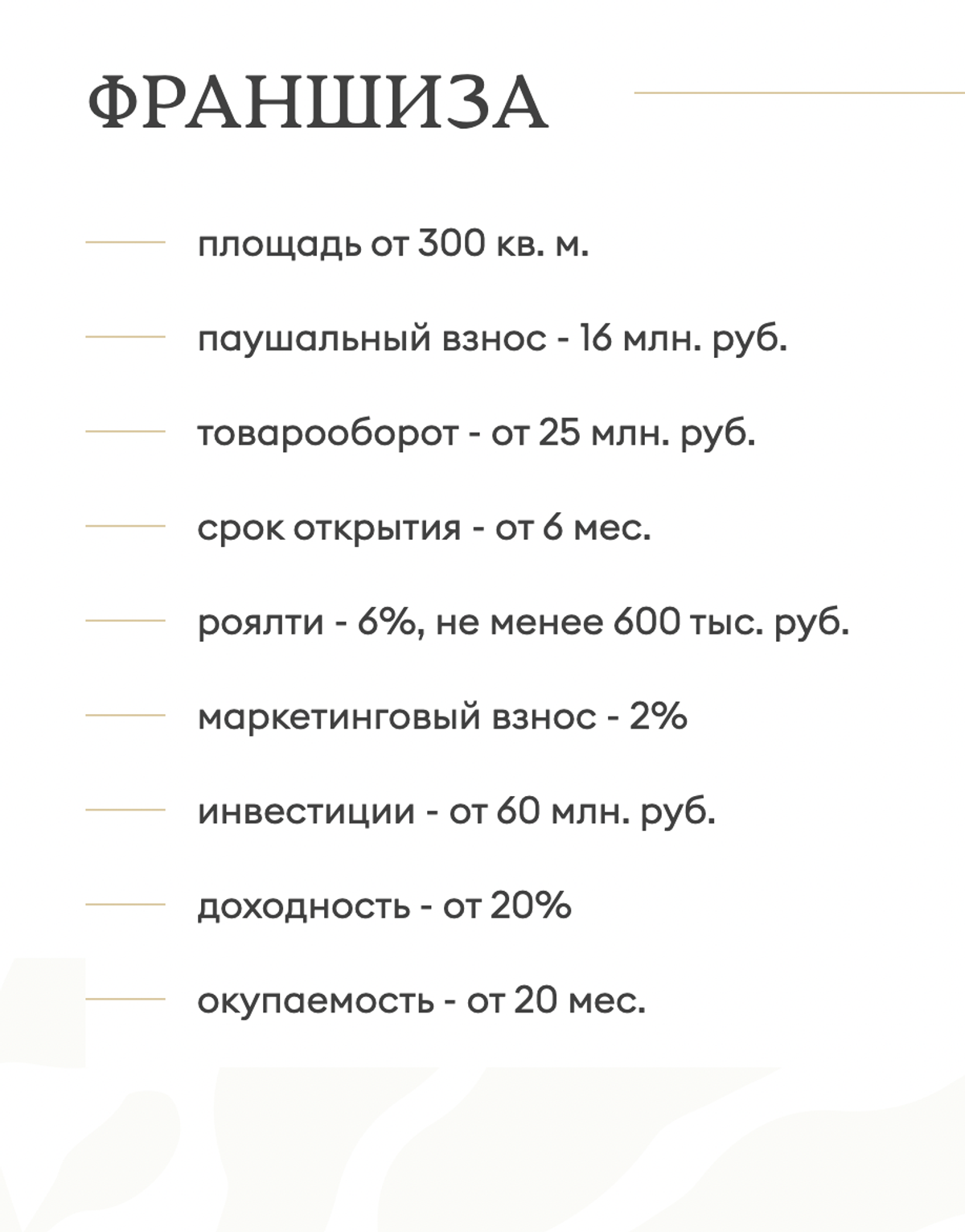
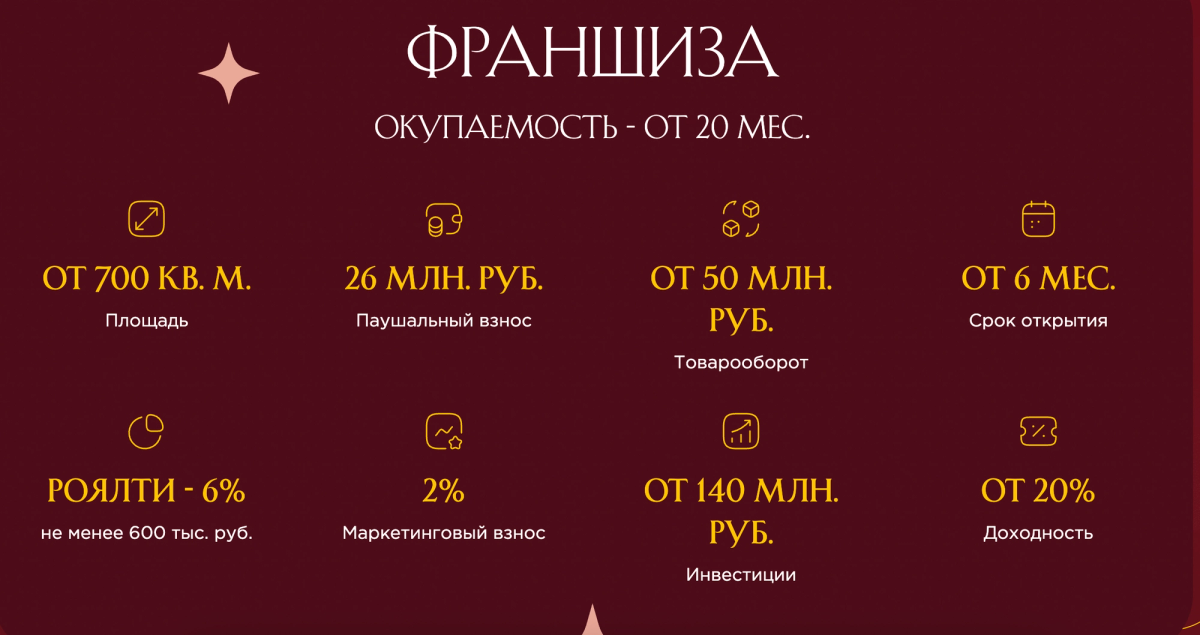
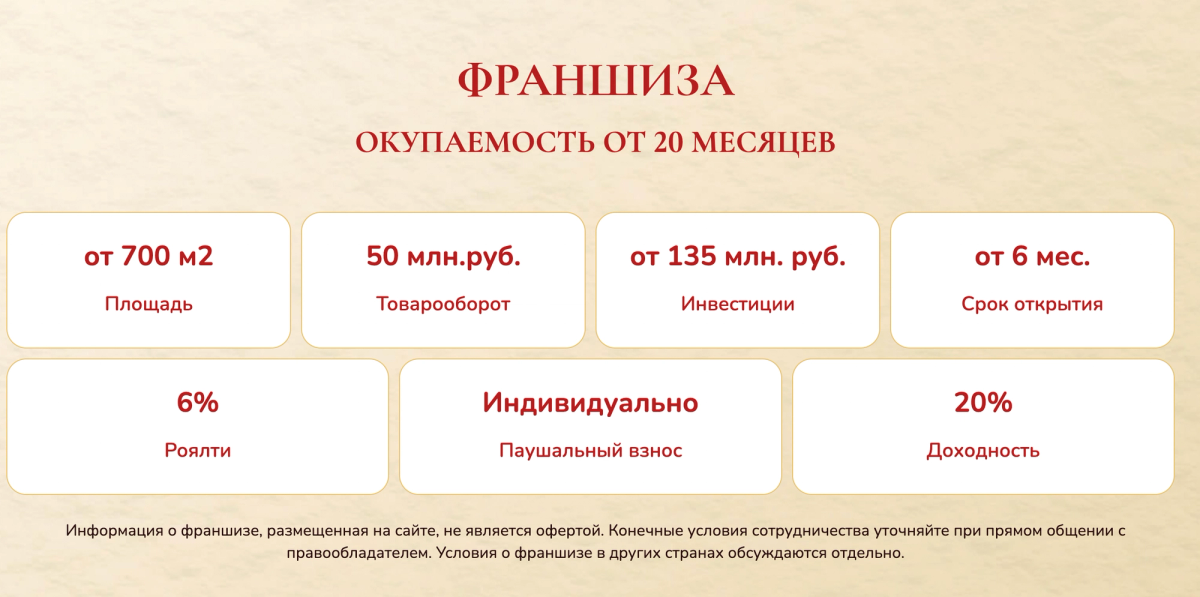
To sum up these numbers briefly:
- Investment to open: starts from 60 million rubles (≈$750K) for the M1 franchise, reaches 135 million rubles (≈$1.69M) for SH, and tops out at a "cosmic" 140 million rubles (≈$1.75M)+ for the M2 brand.
- Franchise fee: ranges from 16 million rubles (≈$200K) to 26 million rubles (≈$325K).
- Location requirements: enormous premium spaces from 300 to 700 sq. m.
We're looking at a B2B product with a price tag of 60,000,000 to 140,000,000+ rubles (≈$750K–$1.75M+). Its target audience is experienced restaurateurs, major investors, and top executives who have around $1.5–2M in liquid capital.
Understanding these numbers, from the start we built a strategy around an audience actively looking for serious B2B projects or holding relevant premium interests.
Building and grouping the keyword set (semantic core)
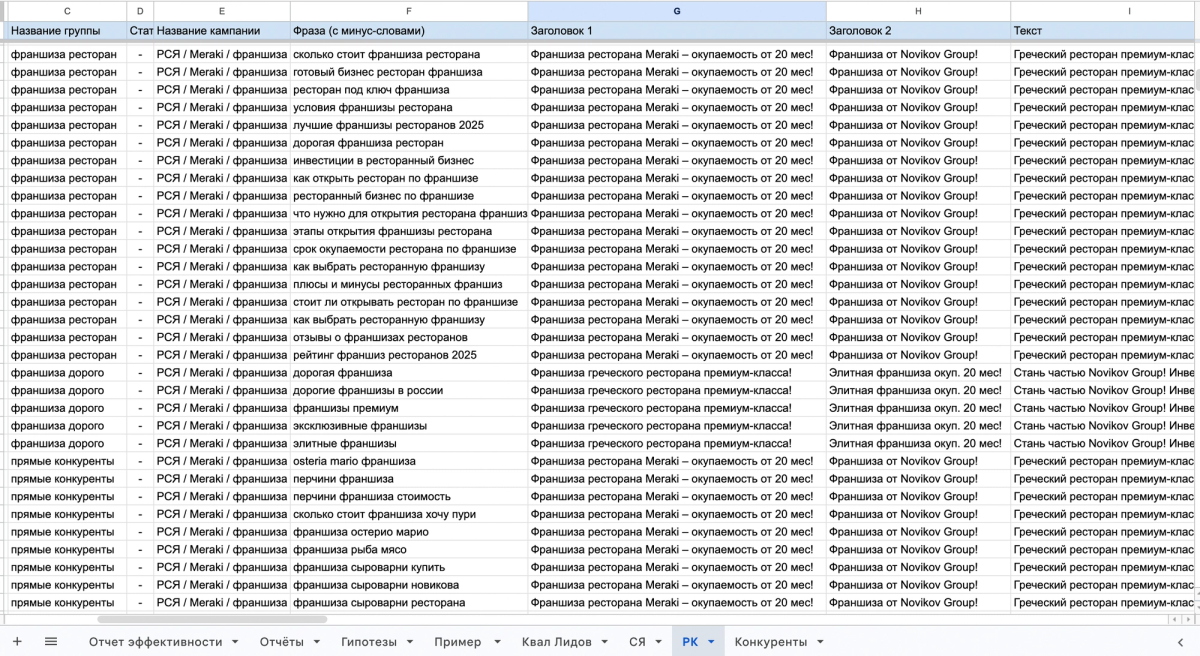
Let's start with the semantic core. On Search, I first collected brand queries closest to B2B; queries reflecting direct interest in buying a restaurant franchise or opening one's own restaurant; and direct and close (a bit further down, as a separate segment) competitors.
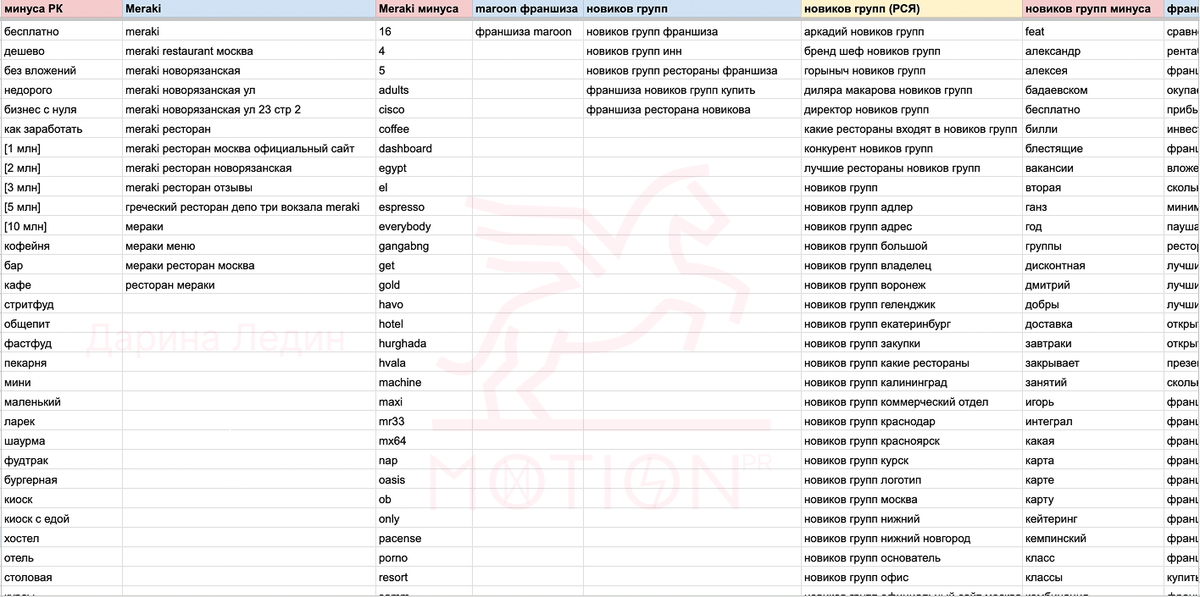
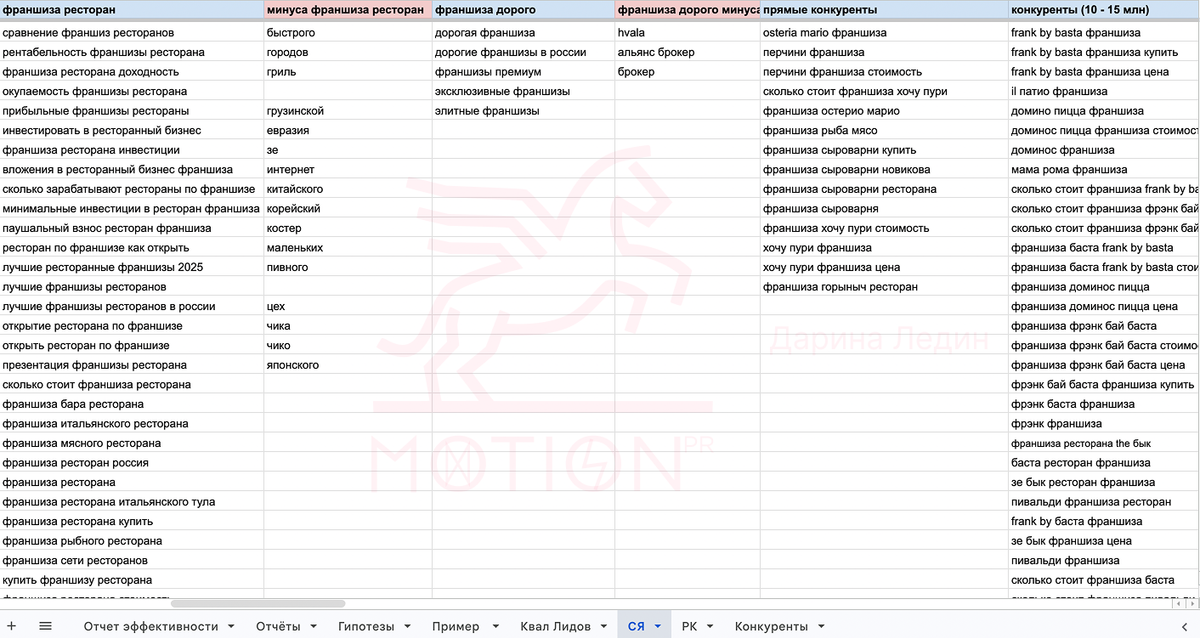
The best performers were brand B2B queries and 'restaurant franchise'; competitor queries performed weakly.
On the Yandex Ad Network (RSYA) I added more loosely-targeted queries: interest in buying popular franchises, cheaper franchises; interest in premium investments; buying luxury real estate and real estate abroad; broad audience interests, and yacht brands:
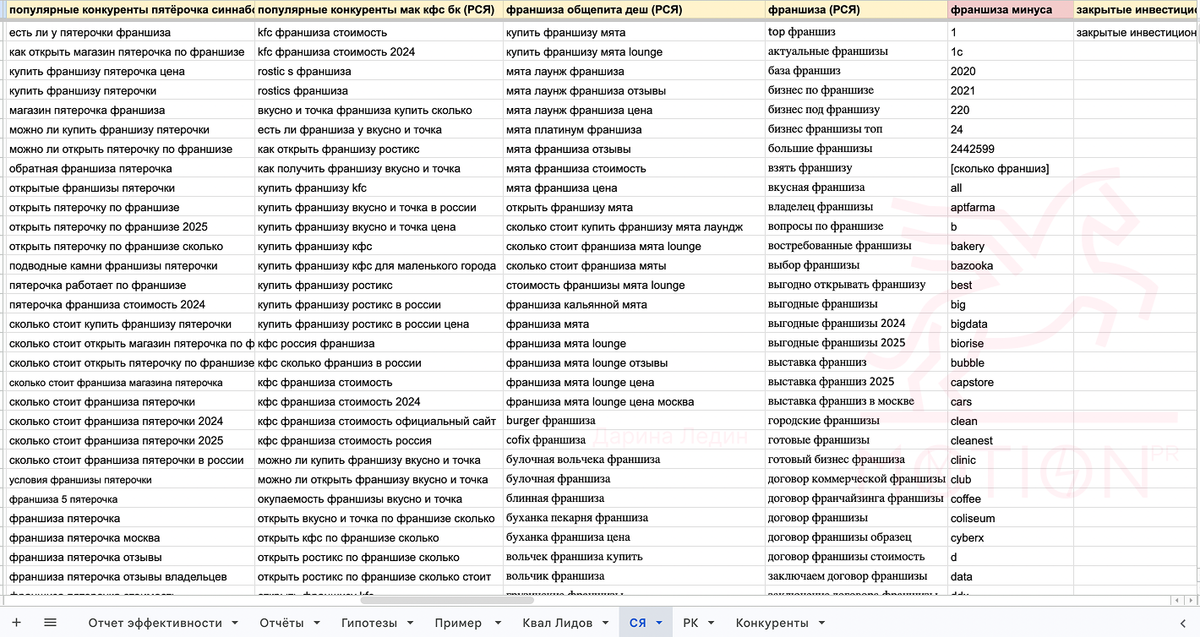
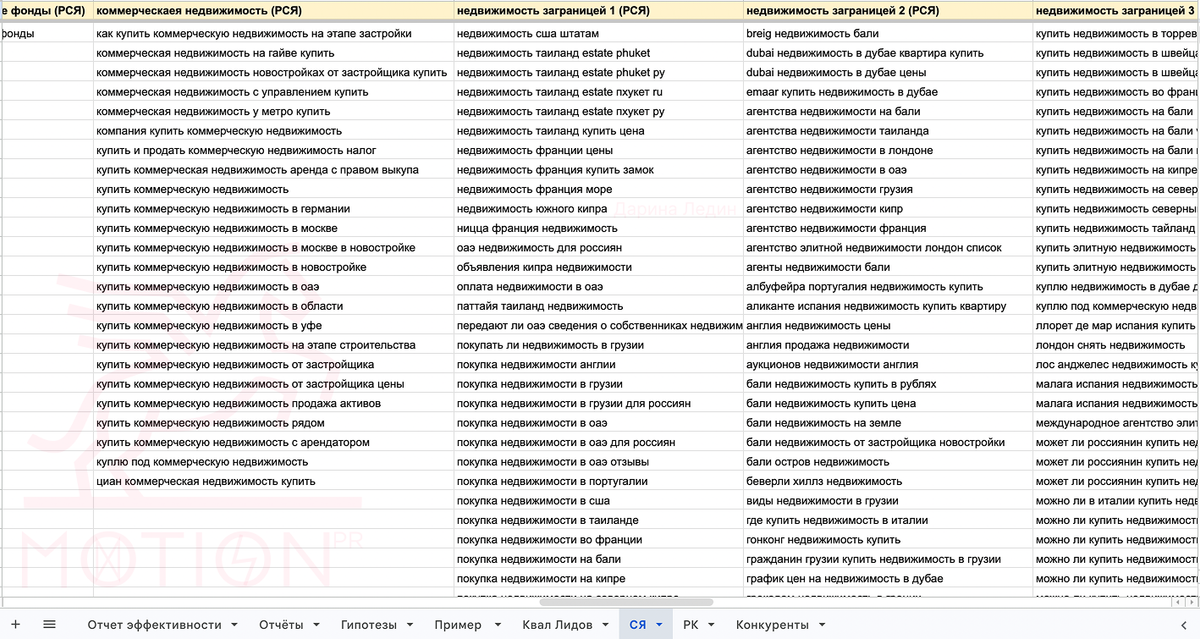
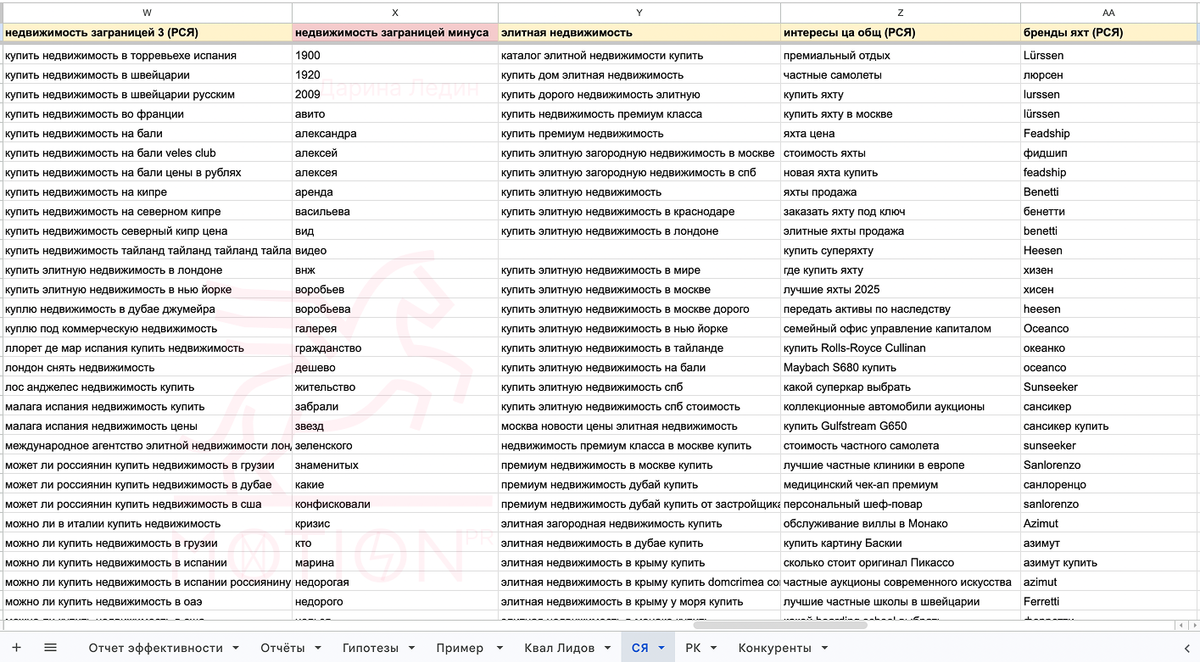
On the ad network, queries under the "real estate abroad" and "luxury real estate" masks performed very well — top queries were "buy real estate in Bali," "Dubai real estate apartment buy," "luxury real estate catalog buy."
I wasn't betting on these groups, but they also performed very well: general audience interests and yacht brands — small reach on these groups, but high conversion.
The groups "popular competitors McDonald's KFC Burger King" and "cheap food-service franchise" were a total failure and a waste of budget. There were leads from these groups, and fairly cheap ones, but not a single qualified one.
I built the ad campaign in spreadsheets and uploaded it via Direct Commander:
Landing pages
Once the semantic core was assembled, the main question came up: where do we send this premium, super-expensive traffic? Initially there was no plan to build quizzes at all. The first two franchises (M1 and M2) had an official page with franchise information on the restaurant holding's main site. The client was confident that was more than enough.
But for B2B performance, that page turned out to be completely dead, for several reasons:
- No focus on the investor. The holding's site had a separate franchising tab, but it was built with zero B2B marketing in mind. The page did nothing to sell the philosophy of owning a status business, didn't flatter a prospective partner's ego, and didn't communicate the glamorous, expensive idea of buying your own premium restaurant.
- Image overload. Instead of a concrete business model, launch stages, and a payback calculator, users were met with huge blocks of text about brand history, culinary philosophy, and interior design.
- No sane lead generation. The only way to submit an inquiry was a giant, dreary form at the very bottom of the page, which asked you to fill in what amounted to a loan application.
We explained this directly to the client, but he refused to make any changes to the site or allocate budget for a new landing page. In the end we burned 160,000₽ (≈$2,000) on two sites, trying to find a working combination purely at the ad-setup level. No miracle happened: traffic vanished like water into dry ground.
The fix: guerrilla marketing with quizzes
With zero budget for proper landing pages, we made an emergency call to build quizzes (short B2B tests). The logic was simple: since we can't rebuild the holding's site, we'll hook the investor with an interactive form on a third-party builder, ask 4–5 qualifying questions about budget and experience, and immediately after they submit their contact info, set up an automatic redirect to that same official site so they keep exploring the brand while a manager picks up the phone.
First I made boring classic quizzes — you can see a couple of examples:
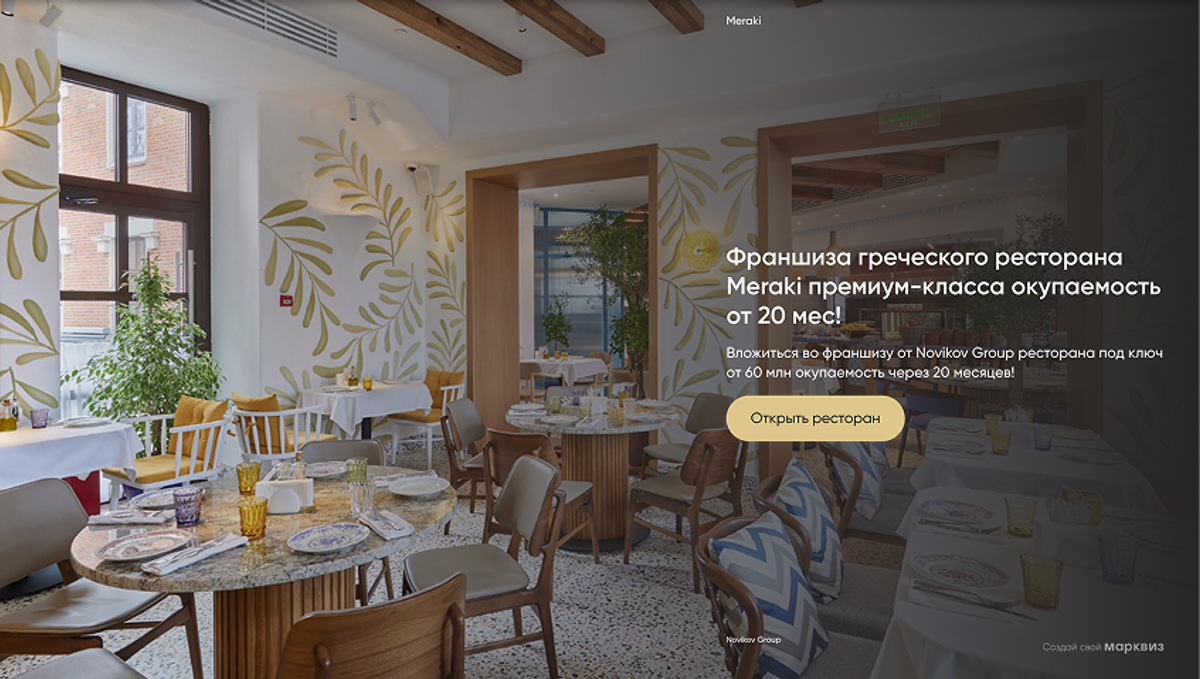
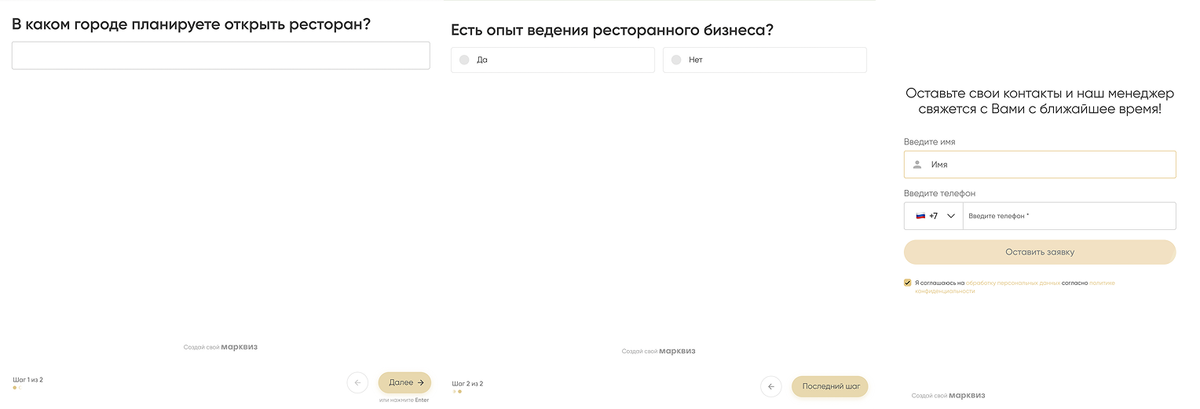
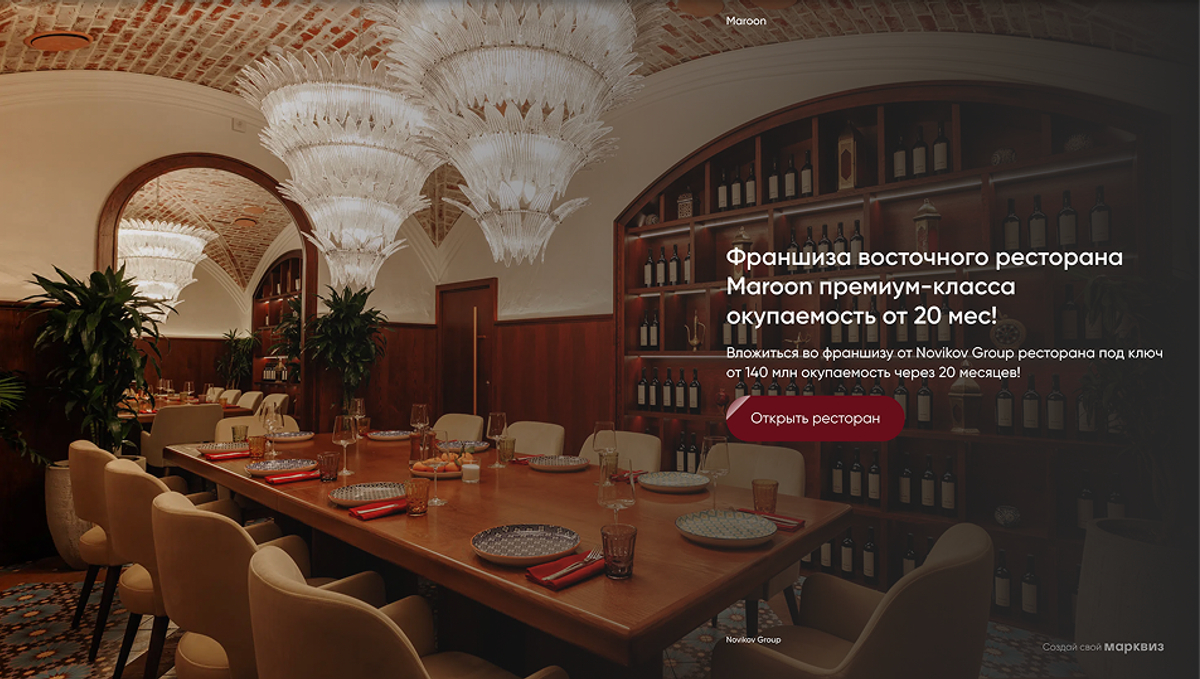
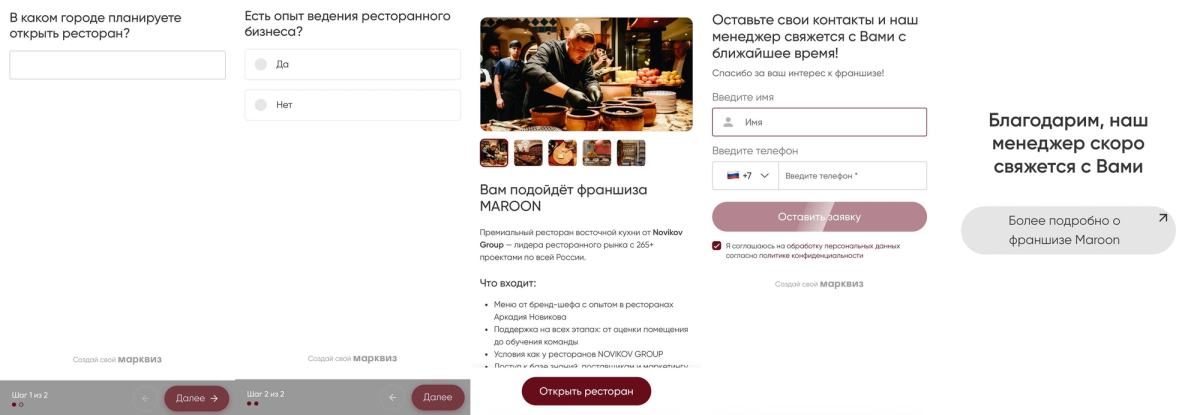
But these got a high cost per lead.
The combo that hit: a multi-quiz under the umbrella brand
While testing guerrilla-style, I tried out a range of hypotheses, but the outright leader in conversion and lead quality turned out to be a combined quiz covering two franchises at once. Instead of sending the user to a specific restaurant and forcing a blind choice, I led with the holding's strong umbrella brand and offered an interactive: "Which premium restaurant franchise fits you best?" The first page also spelled out the economics up front, to filter out non-target leads. And the questions themselves listed the cities where we most wanted to open.
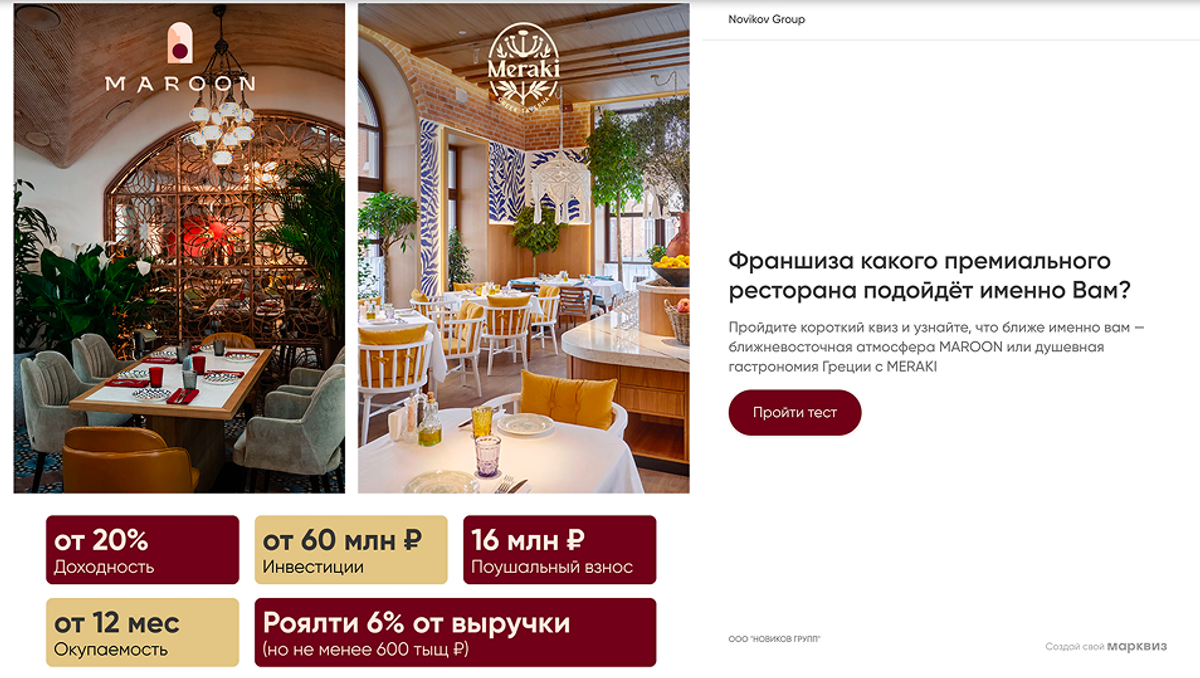
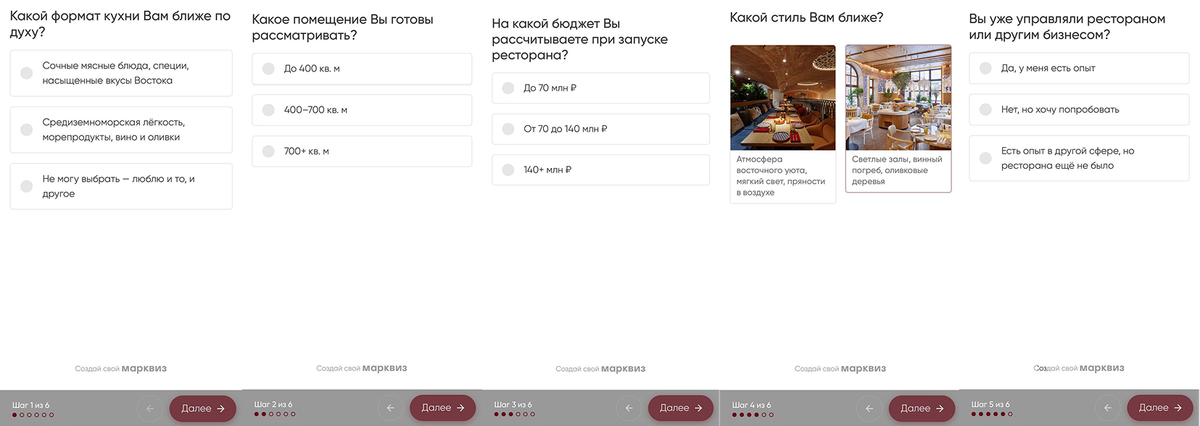
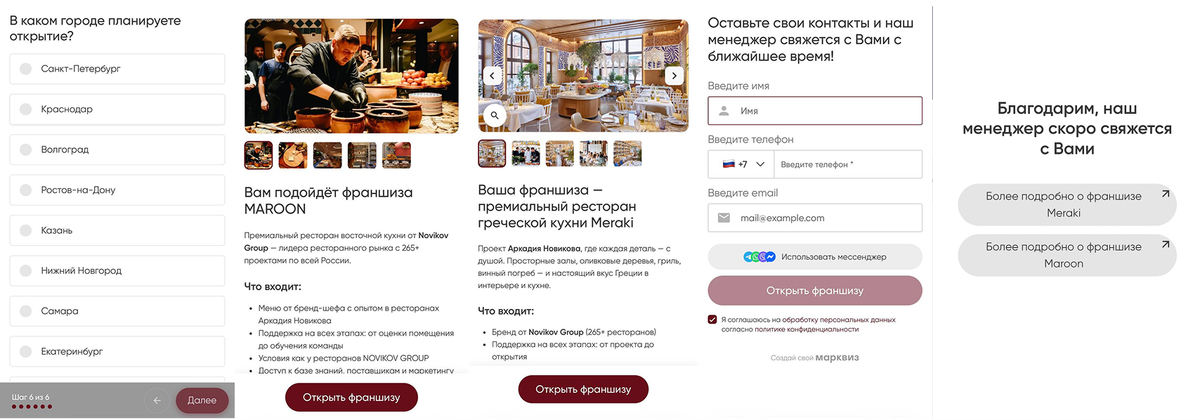
Funnel results: quiz + redirect to the site only
After the first few weeks went into unsuccessful tests of the holding's official site (where we burned 160,000₽ / ≈$2,000), we had to urgently restructure the ad campaigns around quizzes. First we ran traffic to plain, boring standalone questionnaires for each brand separately, constantly tweaking and trying variants, and only after going through this round of tests did we land on a working multi-quiz format. Accounting for this whole chain of hypotheses, the final efficiency matrix over 4 months of work looks like this:
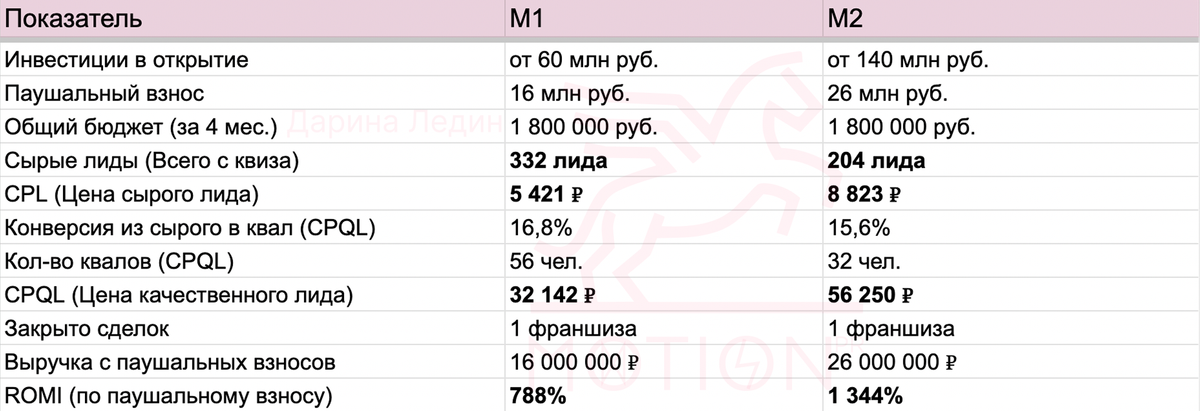
Main takeaways from the quiz-funnel results
This stage of work proved an old marketing truth loud and clear: in the premium B2B segment, a cheap lead is almost always an illusion of success. If you only look at the raw numbers in the Direct ad account, the campaign looked triumphant. Getting inquiries for franchises priced at 60 to 140 million rubles (≈$750K–$1.75M) at 5,421₽ (≈$68) and 8,823₽ (≈$110) apiece is any marketer's dream. But once you drop down to the CRM level and the real business, a completely different picture emerges:
- Brutal load on the sales department. Since a plain quiz technically can't sell scale or flatter an investor's ego, it pulled in a huge layer of 'just curious' users. Managers had to sift through hundreds of forms by hand, hearing the classic: 'Oh, I thought this was a coffee-shop franchise for 2 million' or 'I just clicked to take a look.' Because of this, the conversion into a qualified lead (CPQL rate) dropped to a modest 15–16%.
- The real cost of a target contact. Thanks to the long "tail" of non-target inquiries and weeks spent testing boring, standalone quizzes, the final cost of a qualified investor (CPQL) came out to 32,142₽ (≈$402) for M1 and 56,250₽ (≈$703) for M2.
- Revenue outcome. Yes, thanks to the strength of the brands and the fact that we managed to find the multi-quiz format, the sales team was able to close one major deal on each project. The franchises paid back the ad spend in the very first month, posting an astronomical ROMI (788% and 1,344%). The business made millions, but this result was pulled out by force and on the edge of manager burnout.
My verdict: Quizzes in the premium segment are a great marketing tool when you need to launch fast under harsh constraints or with zero production budget. But building systemic B2B performance on 100+ million ruble tickets on top of them is a strategic mistake.
Now let's look at what happened on the SH project, where the client listened to us from the start, didn't skimp on a custom landing page and a quality video funnel, and how that affected the outcome.
How a custom landing page and video warm-up cut the cost of a quality lead threefold
Armed with hard numbers and conclusions from the previous projects (M1 and M2), we approached the launch of the premium SH franchise (investment from 135 million rubles / ≈$1.69M) with a fundamentally different strategy.
We laid our cards on the table right away with the new client, showing the previous client's results. Our main argument went like this:
"If we send premium B2B traffic to an ordinary image-driven page on the holding's site, we'll burn money. If we bet only on quizzes, we'll flood the sales team with cheap junk and burn out the managers. We need a full custom funnel with deep video warm-up."
The argument worked 100%. The client agreed with our reasoning and allocated budget for a development team, copywriting, and quality video production.
Real-time test: launching on quizzes while we prepare a proper funnel
Building a custom landing page and producing video content isn't a one-day job. But in performance marketing, time is money, and no one was about to sit on their hands for a couple of months. We decided: launch contextual advertising immediately, using those same "unfortunate" quizzes as a temporary landing page.
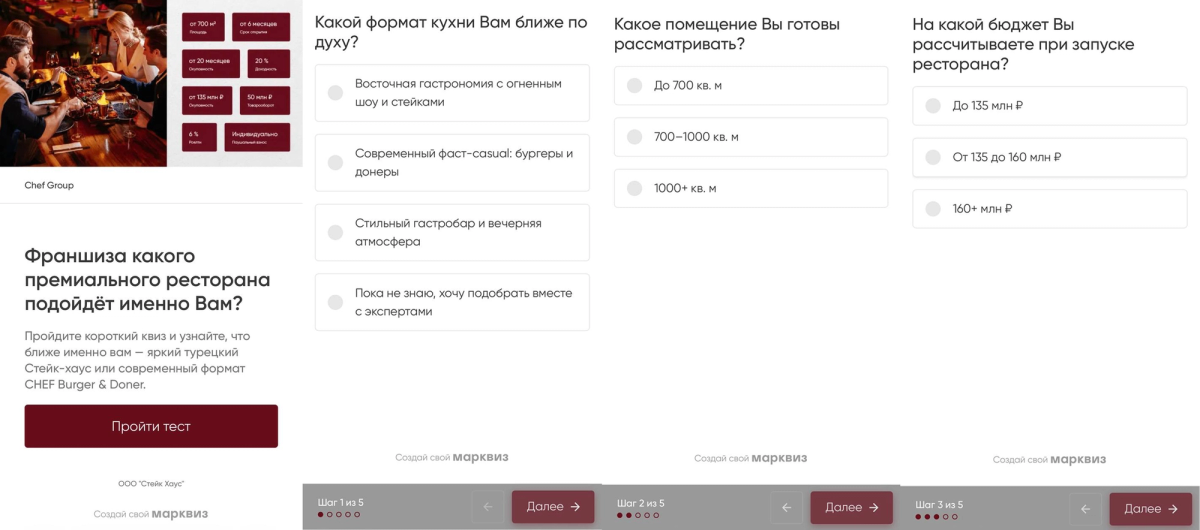
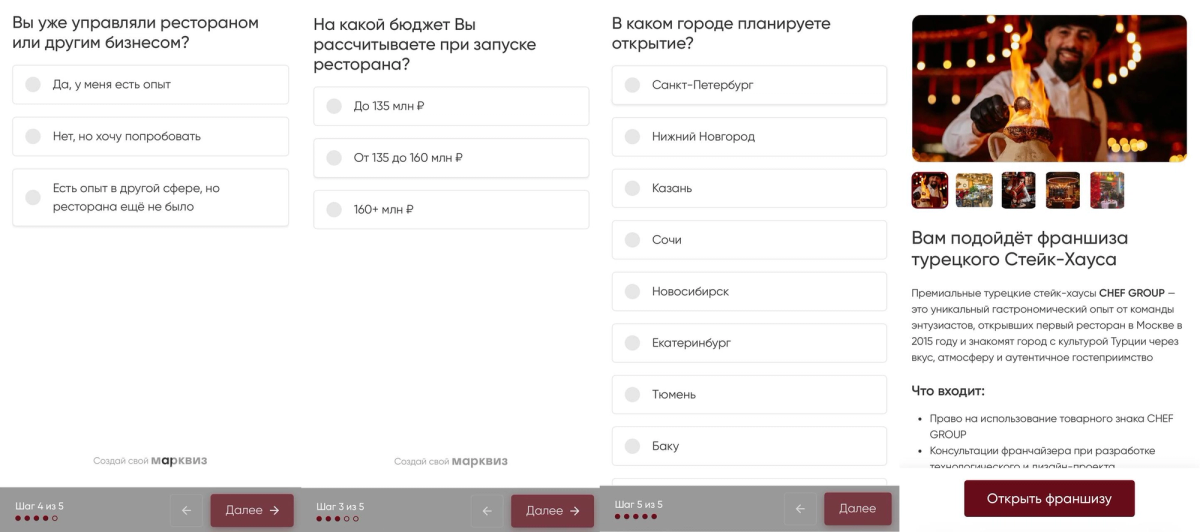
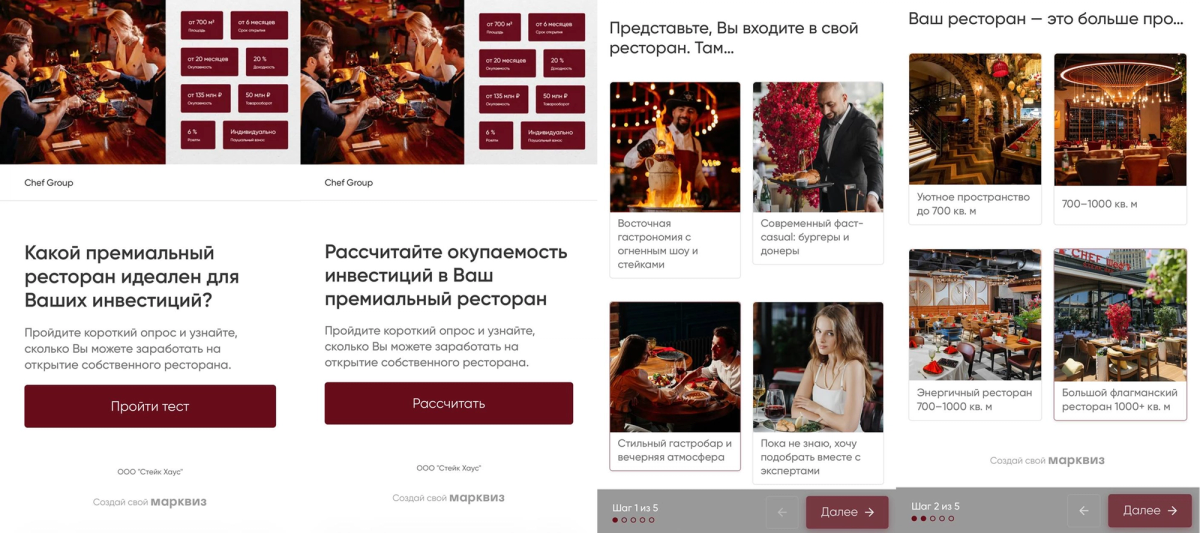
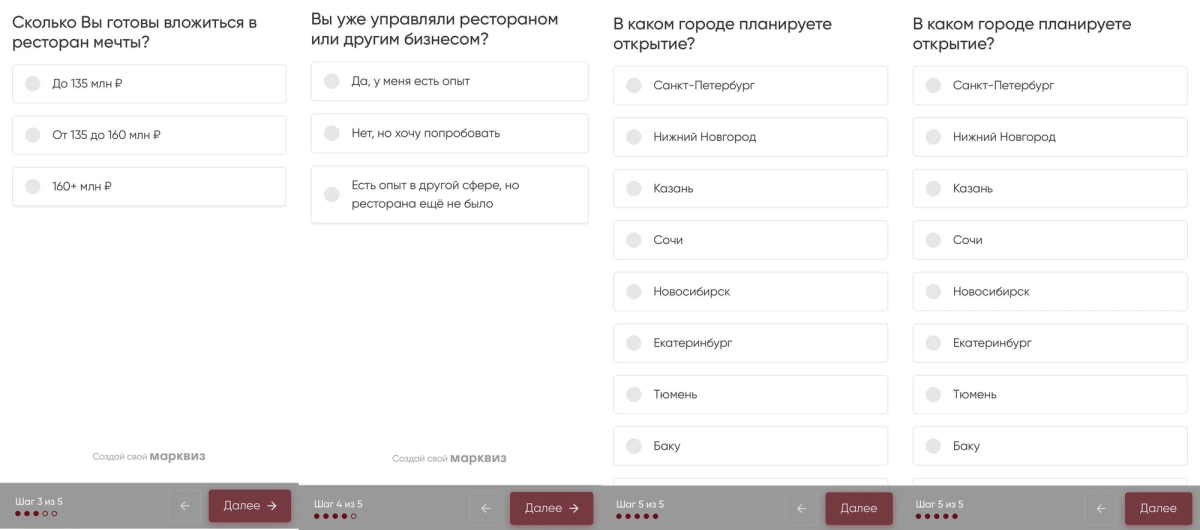
The first 2 months we ran traffic to the quizzes and got a CPQL of 26,418.90₽ (≈$330), 64 quals, spending 1,690,809.60₽ (≈$21,135).
The cost of a raw lead over this period came to 5,960₽ (≈$75).
The funnel with a calculator and video overview
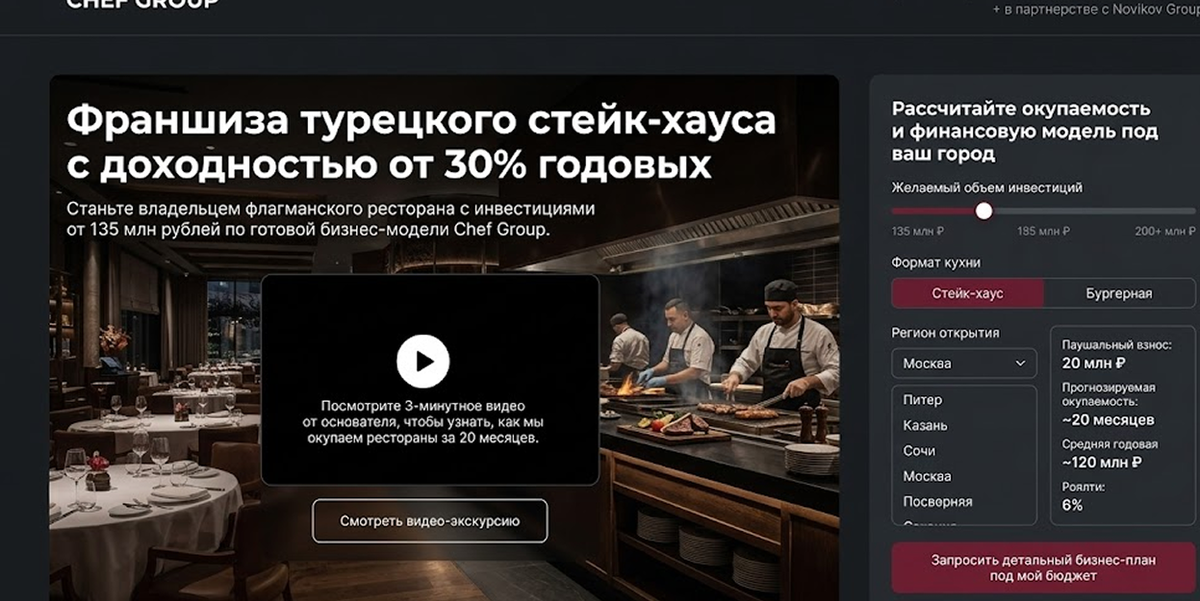
By the third month of work, all the preparation was done: the team shipped a finished interactive landing page with an investment calculator and that same short first-person video warm-up.
We fully switched off the quizzes and redirected 100% of the ad traffic from Direct to the new funnel. And we immediately saw a tectonic shift in the project's economics.
Over the remaining 5 months of work on the new landing page, we spent 3,221,533.20₽ (≈$40,269) (strictly including VAT). The results on clean, deliberate traffic broke down as follows:
- Raw inquiries: we got only 232 inquiries over 5 months. Marketing-adjacent people tend to panic at this stage, since the ad account's raw lead cost jumped to 13,885.91₽ (≈$174). Investors could no longer poke buttons for fun — the site demanded engagement, watching the video, and deliberately choosing parameters in the calculator.
- Lead quality: of the 232 people who filled out the form, 208 turned out to be genuine, qualified investors! Anomalous conversion: the filter worked so powerfully that the raw-lead-to-qual conversion (CPQL rate) blew through every B2B ceiling and hit 89.65%. Almost every single first call from the sales team landed right on target.
- Final qual cost: the cost of a quality, well-packaged lead for a project with a 135+ million ruble (≈$1.69M+) ticket dropped to 15,488.14₽ (≈$194). For comparison, recall: at the initial-test stage with plain quizzes, one qual cost us 26,418.90₽ (≈$330), and the sales team manually sifted through tons of spam. The video funnel with the calculator on the first screen cut the real cost of a target contact by almost 11,000 rubles (≈$138) and completely unloaded the sales team. Managers stopped acting as "answering machines" for the curious and focused on big-ticket deals, which ultimately closed two franchises.
Final numbers over 7 months:
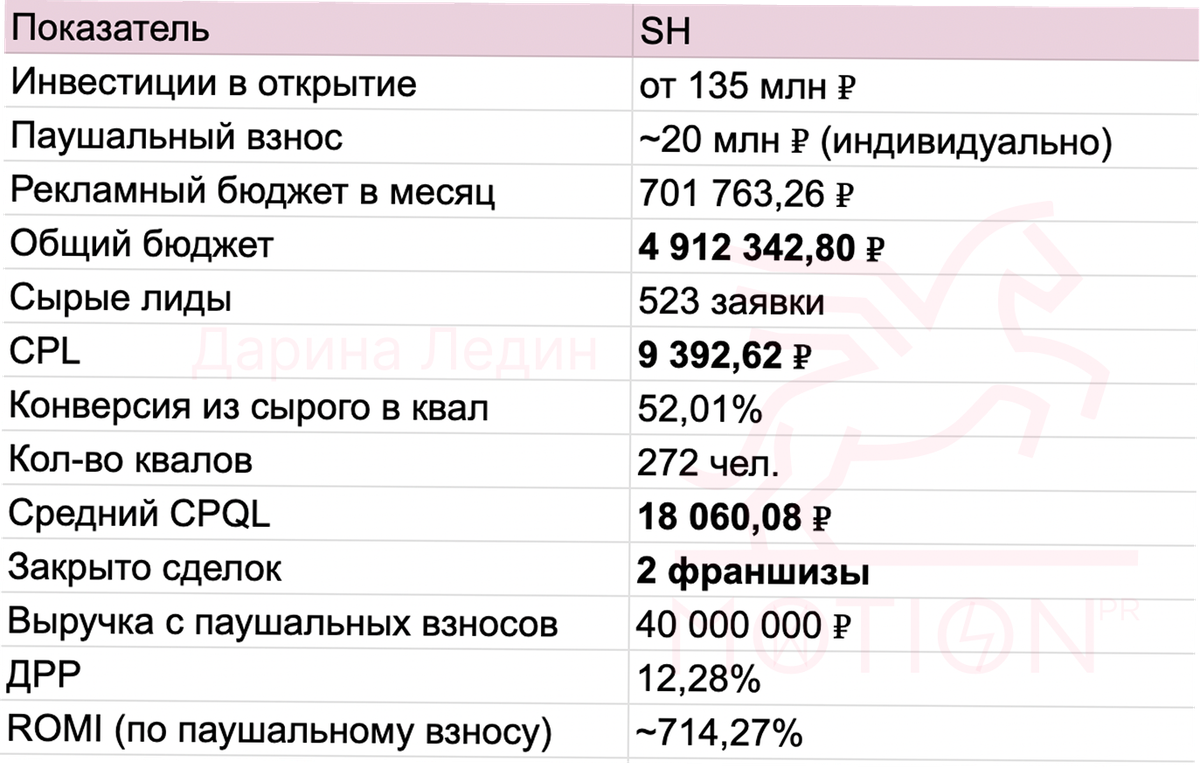
The main insight from this case
In the premium segment, you can't judge marketing by the cost of a raw lead (CPL). This is the main trap inexperienced specialists and B2B companies fall into.
When we chased a cheap lead on quizzes, we got a pretty picture in Yandex, but in reality we forced the sales team to plow through tons of junk, burning hours on empty calls. The final cost of a quality contact shot into orbit.
As soon as we invested time and budget into deliberateness — built an interactive calculator and made people watch a first-person video before leaving their contact info — the results changed:
- We cut off non-target audience before they ever reached the capture form.
- We raised the qual conversion to a staggering 89.65%.
- We cut the real cost of a target B2B partner by almost 3x compared to the heavy-lux quiz approach.
Verdict: Quizzes are a great tool for a quick, scrappy test to find your semantics and first footholds. But if you're building systemic, expensive performance marketing meant to bring in multi-million-ruble contracts while protecting your sales team's sanity — your only path is custom production, B2B messaging, and hard traffic filtering through video funnels.
Contact the author
Comments
No comments yet — be the first.