

Boosting Offline Conversions for a Moscow Coffee Chain With a QR Code
A coffee shop chain in Moscow complained that digital advertising 'doesn't work offline' — there was no way to tell if it brought in real guests. I suggested putting a QR code on the banners offering a 20% discount when shown in the café, and set the geo-targeting to a radius around each location. Result: over two weeks in January, 244 guests used the QR code — advertising went from a 'black box' to a measurable offline conversion.
Read this article in Russian →
I want to share a case that nicely illustrates how to solve one of the most common pains for local businesses — the gap between online advertising and real offline sales.
A problem familiar to almost every offline business
A popular coffee shop chain in Moscow came to me with a typical but very painful complaint: ‘Digital advertising doesn’t work offline.’
A familiar situation for anyone with physical locations: you run ads, pay for impressions and clicks, the audience seems to see them — but there's no way to tell whether that advertising actually brought real guests into the café. Someone looks at a banner on their phone and shows up (or doesn't) two days later — how do you track that? Online metrics show clicks and reach, while the register lives its own life. Between them is a 'blind spot' where any understanding of effectiveness gets lost.
That's exactly the blind spot we closed.
Why a QR code is the right tool for this job
The bridge between a smartphone screen and a café table turned out to be a QR code. And that's not a random choice: over the past few years QR has gone from being a 'COVID' technology to a full-fledged marketing tool people are used to.
A few numbers back up that this bet was right: QR code usage worldwide grew 323% from 2021 to 2023, and the trend keeps climbing. In Russia, the habit of scanning codes got reinforced through payments too — in 2023, the number of purchases paid via QR grew 53x compared to the year before. In other words, the audience is no longer wary of pointing a camera at a code — it's become a routine gesture.
The main advantage of QR for our task is trackability. Every scan can be counted. Which means, for the first time, it becomes possible to connect a specific piece of online advertising to a specific action by a real guest in the café.
The hypothesis and the mechanics
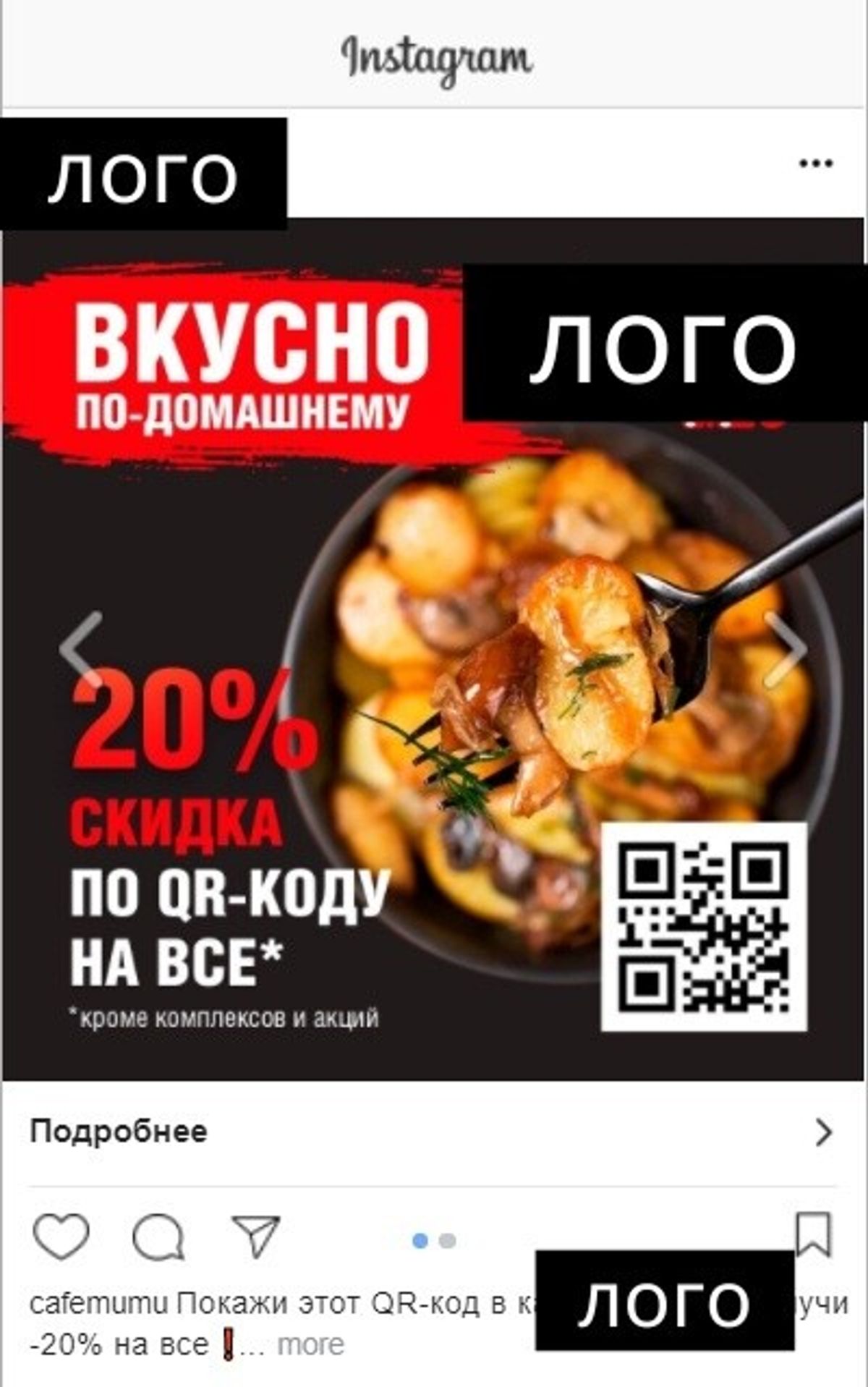
I suggested the client test a simple but workable hypothesis: put a QR code on the ad banner that gives a 20% discount on an order when shown in the café.
The logic of the mechanic:
- A person sees our ad on their smartphone;
- scans the QR code and gets a 20% discount — a clear, tangible benefit worth making the trip for;
- shows the code at the register in the café;
- the barista logs the redemption — and we get a precise, measurable offline conversion.
The discount plays a double role here: it motivates the guest to make the trip, and it also serves as a counter — every redeemed code is a proven online-to-offline conversion.
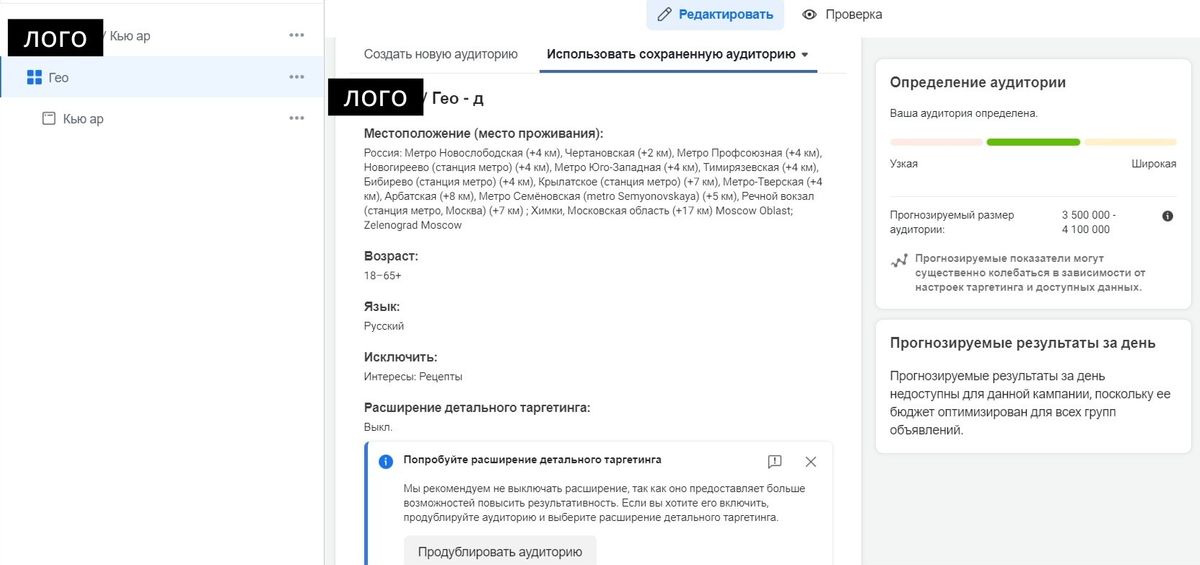
Targeting setup: geo is everything
For a local business, geography is a key parameter. There's no point showing an ad for the coffee shop to someone on the other side of town — they simply won't make the trip.
So I set the geo-targeting to a close radius around every café in the chain. The ad was shown only to people who were physically nearby and could realistically walk in — on the way to work, on a walk, between errands. This sharply increases the odds that the discount works here and now, rather than 'someday later.'
Result
We launched the campaign over the holidays — the highest-traffic period. Here's what we got:
According to the client, 244 customers used the QR code between January 1 and 15.
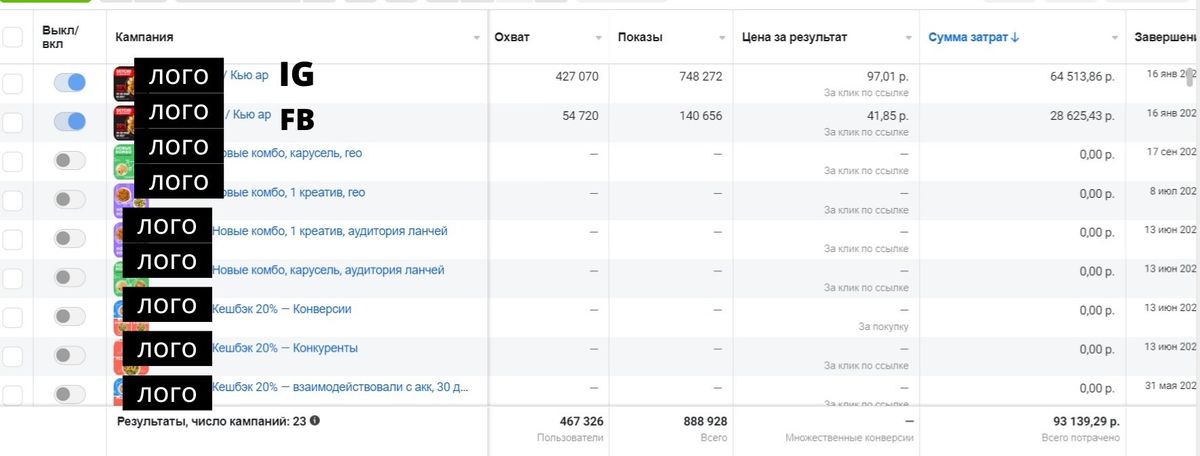
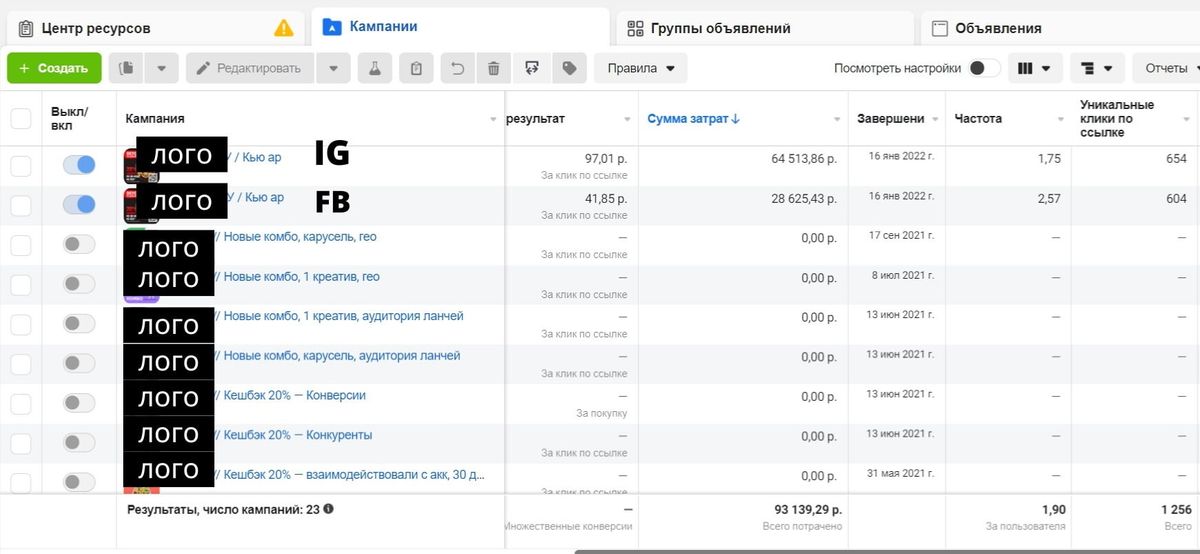
That's 244 proven offline visits that came specifically from digital advertising. For the first time, the client wasn't looking at abstract 'impressions and clicks' but at specific, real guests brought in by their online ads. Advertising stopped being a 'black box' — its effectiveness became measurable.
Takeaways from this case
The case is simple, but the principle in it is gold, and it works for any business with offline locations (cafés, shops, salons, showrooms):
- Online and offline can and should be connected. 'Advertising doesn't work offline' usually doesn't mean 'doesn't work' — it means 'isn't measured.' A QR code turns the invisible into numbers.
- Give people a reason to make the trip. A tangible benefit (a 20% discount) is both a motivator and, at the same time, a conversion-counting tool.
- For a local business, geo is half the battle. Show ads to people who are actually near the location.
Today, now that scanning codes has become a universal habit, this mechanic works even better than it did back in 2022 — which is why the case still holds up.
Do you have offline locations and aren't sure whether your advertising pays off? Message me on Telegram — I’ll help connect your online promotion to real sales and make the results measurable.
Contact the author
Comments
No comments yet — be the first.